Dice was a 1970’s Swedish symphonic progressive rock band that gained immediate great reputation mainly among musicians and frequently got compared to the major acts in the field of art-rock (Gentle Giant, Yes, ELP, Genesis, etc).

Please enjoy these previously unheard Dice songs (more to come this year)! The band has put great effort into presenting this music in a shape and form that reflects how Dice always wanted them to sound:

”Paradise” has music by Leif and Örjan and lyrics by Leif. It was written sometime mid 1979 and recorded as a demo in the bands’ rehearsal studio. The line-up was: Per on drums, Fredrik on bass, Örjan on guitars and Leif on keyboards and lead vocals. The song was performed live, but never ended up released on record until now. The band considers ”Paradise” to be highly representative for the type of music they loved to make.

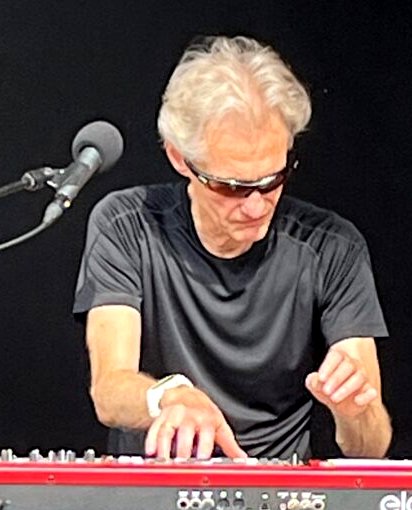
The music for ”One Good Reason” was composed by Leif and Örjan sometime during the first decade of the 2000’s. Per wrote the lyrics in September 2025. Fredriks’ bass playing can be heard in the mid section of the song, and features the original lead singer Robert Holmin, backing the voices of Leif and Örjan. This collective effort will probably be the last finalized song from all members of the band, mainly because keyboard player, composer and vocalist Leif Larson sadly passed away in early 2024.

Though Dice has not existed as a band since the start of the 1980’s, they still have a quite large number of devoted fans.

There are 2 Dice albums available to order through Marquee / Belle Antique Records in Japan:

The story of Dice:

In 1964, the Beatles was a big name in Sweden, sweeping hundreds of thousands of people off their feet with their new sound and their truly fantastic songs. There were two guys in a prep-school, Leif Larson (born in 1956) and Örjan Strandberg (born in 1956), on the southside of Stockholm in Sweden, who immediately got caught by the Beatles’ music and started writing music together. Both the boys were eight years of age and didn’t know of the other. Two years later in 1966, they met for the first time, discovering their common burning interest for music.

During music-classes they often shared the floor, performing before their classes. Sometimes in teasing competition, sometimes together. As a couple of years passed they got together a band, playing at occasional Friday dances at their school. Soon, they started to yearn for new borders of music besides those of the standard R&B-numbers that were easy to play. Leif, the pianist was already having classical piano lessons and Örjan the guitarist had early lessons on cello, both through their lessons getting to play classical but quite boring music. In the late 1960’s, the Beatles’ music became far more advanced and new bands like Procol Harum appeared, not to forget Brian Wilson’s genius new work with the Beach Boys. The merger between classical music and pop was tried out through bands like the Dutch band Ekseption. Very soon there would be something called symphonic rock, as presented by early bands like The Nice, King Crimson, Genesis, and others.

By this time in the very early 1970’s, Leif and Örjan had started writing material as well as orchestrating classical works (such as Stravinskijs’ ”The Rite of Spring”, Elgars’ ”Pomp And Circumstance” and others) for a rockband. They performed with this material at a couple of schools, and discovered that they were really comfortable with this kind of music. Leif and Örjan spent a lot of time at one anothers’ homes composing music, trying out new exciting harmonies, learning very intensely about music, through practising.

In the meantime they got to hear records from Gentle Giant and ELP, which meant a major boost of inspiration to them both. With a used Farfisa organ and a cheap electric guitar they played and wrote music, practically every weekend. In 1973 they had more or less completed what was later released as ”Follies” on Dices’ first album and also ”The Four Riders Of the Apocalypse” which was fully recorded in 1977 and released on CD in 1992.

In 1973 they met with Per Andersson (born in 1959), a music student taking lessons in percussion. Per wrote music himself and most importantly, he wrote excellent lyrics. In 1974 he permanently joined the band. They were now rehearsing in a barn, in the south of Stockholm. Not knowing any bassplayers in their vicinity, the three boys put up ads in music stores.

In 1975 bass player Fredrik Vildö (born in 1956) replied to one of those. Fredrik worked in one of the bigger music stores in Stockholm and had also been with a few local bands earlier. He now became the fourth member of Dice. Now they started touring with the band, mostly at clubs and highschools in the Stockholm area. They moved to new and bigger rehearsal facilities in the north of Stockholm. (Eventually they shared these premises with another band ”Horizont”, featuring among others Jonas Isacsson, the Roxette-guitarist). They built a simple studio here in order to be able to record their new material continuously, for example ”The Four Riders Of the Apocalypse” which they also performed on national radio in 1977. During this year they were also signed by a music publishing company; Peer Southern. This eventually led to the recording of their first album by the end of this year. The album ”Dice” was released in early 1978.

For the album and for a shorter tour coming up right after its release, Robert Holmin (born in 1955) was engaged as their lead singer. Later in 1978 they made their first trip to Denmark, again as a four-member group with Örjan and Leif doing most of the lead singing. They were not satisfied with their record company and approached several others without any luck. In this process they wrote and recorded new material in early 1979. These songs differed some from the previous material, being a little less complex. Even with shorter songs, it was still hard to find a record label interested in releasing the material.

Dice did their second Danish tour with both new and old material. Back in Sweden they continued gigging mainly at the Stockholm scenes. At the same time, they wrote more and more conventional pop-material for the publishing company. Someone there occasionally came up with crazy ideas. One of these ideas can be heard on a single where the A-side is called ”Yf” and the B-side is a dirty punkrock number called ”Discipline”. The band is called Kramp, but is in fact Dice. For the punk rock song they even changed instruments with one another to hide their identities; Fredrik sang, Leif played the guitar, Per played the bass and Örjan mistreated the drums. Another alias for Dice as a band was ”The Picknicks”. The boys themselves invented a set of names, during this period of fun and games; Örjan became Sigge Sursläpp (Siggy Sourfart), Leif was Bror Duktig (Brother Clever), Fredrik became Kånkel Berra (Lump-Bert) and Per was simply Hej Bengt (Hi Ben).

By the early 1980’s, the progressive rock scene in Sweden had been conquered by punk rock, disco and new wave. By then the boys felt quite exhausted, trying hard to promote Dice. Örjan had written a song called ”Rock’n’roller Skates”, which was believed to have commercial potential. On advice from their music publisher Southern Music, Leif, Per and Örjan reshaped Dice into Jet Set, featuring Cina Strandberg and Christina Walfridsson on lead vocals. The material written for this band was highly commercial, aiming to conquer ABBA. Jet Sets’ second single ”Diamonds” was very well reviewed. Jet Set recorded five songs in a studio and a further six songs at Örjans’ home demo studio. Producer Kim Fowley (The Runaways, Gene Vincent, The Orchids, Wigwam, ELP, etc) was flown in from the US to produce their first album. They worked day and night for a hectic week, writing some 14 songs, only to find that record company policy had changed suddenly. All in all, the band Jet Set released only two singles.

At this time Leif became quite busy as a touring and recording keyboardist, songwriter, and record-producer for several major Scandinavian artists and acts such as Louise Hoffsten, Bobbysocks, Sanne Salomonsen, Mia & Greta, Elisabeth Andreasen, Björn Skifs, Harpo, Karin Glenmark, Choo Chine, Marie Fredriksson, Clown, Pugh & The Trousers, Helen Arnesen, Shanghai, Suzzies Orkester, John Holm, Magnus Lindberg, Marie Bergman, Ted Gärdestad, Lost Van Goghs and more, as well as a musical arranger for the shows Lovers & Covers and Badrock.

Per was engaged as a drummer with other acts such as RiFiFi, JetSet, Kramp, Charlie Hillson Band, Kaipa II, X-Models, Rohdes Rockers, Efva & the Sadboys, and Big Money, besides working as a songwriting instructor at Fryshuset and as a producer for Pelle & Pelle (with Pelle Almgren).

Robert went on to study chemistry, singing, and musicology, and also founded his own indie label, RHL&B.

Fredrik, who also played with Kjell-Kims, Kramp, Charlie Hillson Band, and Conny Container & The Entertainers, had became very good with PA-systems and was used a lot as a live engineer for several big Swedish acts such as Eva Dahlgren and Carola, besides running a booking agency that brought acts such as Prince, Liza Minelli, Dean Martin and Sammy Davis Jr to Scandinavia.

Örjan had gotten into writing music for films, exhibitions, kick-offs, commercials, laser- and pyroexhibitions and other projects (f ex The Saga Of The Nordic Gods, The Famous Five, Codename Eagle, The Secret Life of Vegetables, and SonyEricsson ringtones) as well as producing music for Christina Knochenhauer, Tommy Körberg / Vicky Benckert / World Youth Choir, Rickard Herrey, Per Herrey and Monica Lilja-Lundin. He also went on to lecture at the SAE Institutes’ Music Business Program and joined the boards of STIM, SKAP and SAMI.

The remainder of the mere 1,500 copies pressed of Dices’ studio album was bought from the record label Marilla (since they never really made an effort to market the records). With no obvious public demand for the vinyls, Örjan was approached in the early 1980’s by a person who wanted to buy some hundred copies of the record at a low price, which he did. A couple of months later this buyer wanted to buy another batch, which also happened.

Then one day, Örjan received a letter from Naohiro Yamazaki with his record labels Belle Epoque / Marquee. Naohiro wrote in the letter that he had paid large sums for the Dice vinyls from this guy in northern Sweden. So Naohiro asked if his label could release the album on CD. The band gladly agreed and in 1987 the studio album was released on CD by Naohiros’ company. 

A couple of years later a second album was released: ”The Four Riders Of The Apocalypse”, an instrumental suite written and recorded prior to the studio album. Eventually two more albums were released by Naohiros’ label, this time with live recordings plus some bonus tracks.

The Dice members remain friends for life and still meet regularly, with the exception of Leif Larson who sadly passed away in January of 2024. All the former Dice-members are amazed over the cult that Dice apparently has became, and are also very proud to see that people still like their music today.

Thank you, dear listeners, for enjoying our music over 50 years!

Per Andersson
Robert Holmin
Örjan Strandberg
Fredrik Vildö
Leif Larson (in memoriam)